You named your Shopify store something that sounds established and trustworthy — "Spencer London," "Nordic Haus," "Milano Leather Co." Then you connected your product feed to Google Merchant Center, and within days you got the email nobody wants: "Misrepresentation of self or business." No line item. No screenshot. Just a suspended account and a link to a policy page that doesn't obviously describe anything you did wrong.
Here's the part that catches honest merchants off guard: you may never have written the words "based in London" or "Made in Italy" anywhere on your site. You didn't lie. But your brand name implied a geography — a country, a city, a heritage — and your actual business signals (address, phone, currency, domain, fulfillment) pointed somewhere completely different. To Google's automated review, that gap reads as a business hiding where it really operates. This is one of the quietest and most frustrating triggers behind modern misrepresentation suspensions, and it is very fixable once you understand what Google is actually measuring.
What "brand-implied geography" actually means to Google
Google's Misrepresentation policy states plainly that merchants may not scam users "by hiding or misrepresenting information about your business or product." It calls out businesses that "present a false identity, business name, or contact information" and those that "impersonate other brands or businesses... to hide your identity." The policy is not limited to explicit false claims. It targets the impression your storefront creates versus the reality a reviewer can verify.
A brand name is a signal. When your name contains a place — London, Paris, Nordic, Milano, California, Tokyo — a shopper reasonably infers something about where you are, where your goods come from, or what standards you follow. If none of your verifiable business data supports that inference, you have created a misleading impression. Google doesn't need to prove you intended to deceive; the policy applies to any presentation that is unclear, inconsistent, or unverifiable.
The trap is that this failure mode is almost invisible from inside your own store. Every page looks fine in isolation. The problem only appears when a reviewer (or an automated system) lines up your name against your address, your phone number, your currency, your domain, and your shipping terms — and the geographies don't agree.
The five geographic signals that must agree
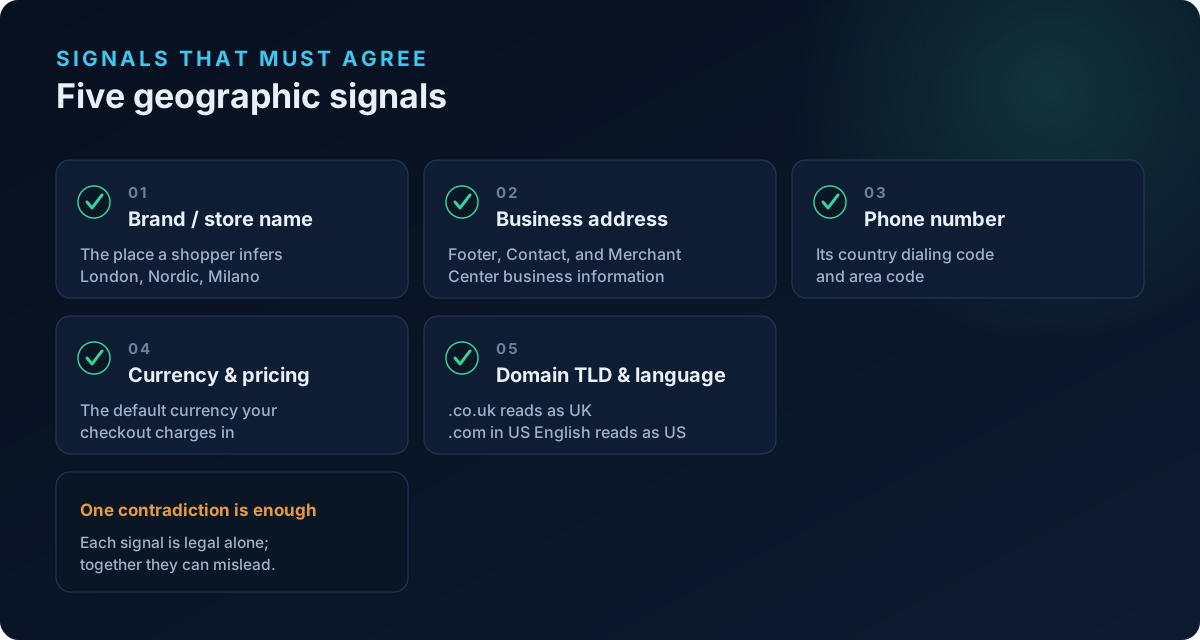
Think of your store as making one implicit claim about where you are. Every element below either supports that claim or contradicts it. A misrepresentation flag is usually a contradiction between two or more of these:
- Brand / store name — the place a shopper infers from your name ("London," "Nordic," "Milano").
- Business address — the physical address in your footer, Contact page, and Merchant Center Business Information.
- Phone number — its country dialing code and area code.
- Currency and pricing — the default currency your checkout charges in.
- Domain TLD and language — a
.co.ukreads as UK; a.comin US English reads as US.
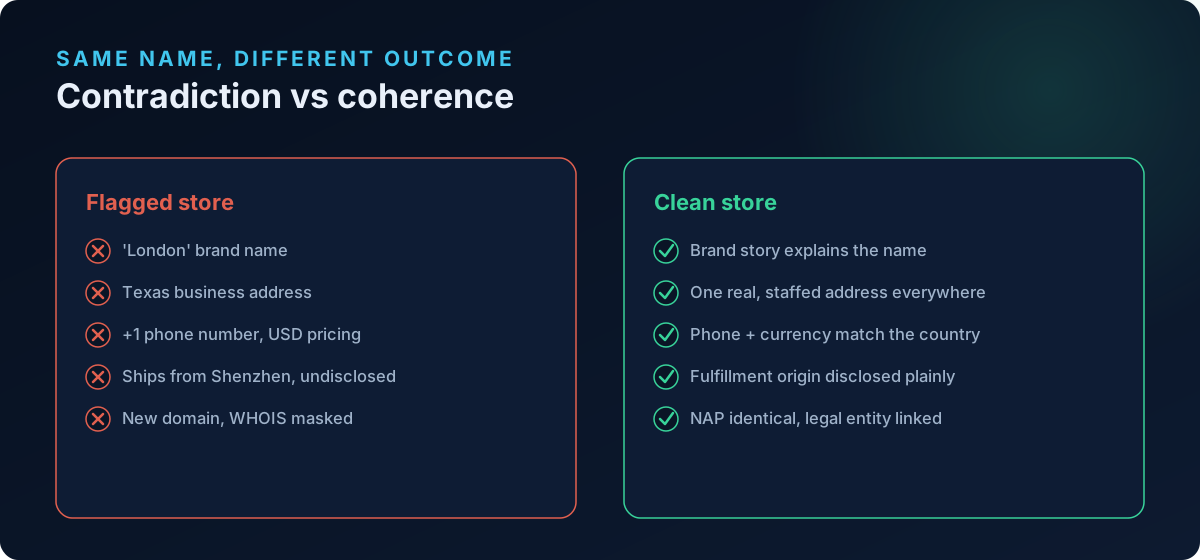
A "London" brand that lists a Texas address, a +1 phone number, prices everything in USD, sells on a .com, and ships from a warehouse in Shenzhen is making five contradictory statements at once. Each one is individually legal. Together they say: this business is not being straight about where it operates. That is the exact impression the misrepresentation policy exists to stop.
The most common real-world version of this
The pattern that trips up the most Shopify merchants isn't malicious rebranding — it's aspirational naming plus global fulfillment:
- A US or India-based operator picks a European-sounding brand name because it "sounds premium."
- The store is registered and operated domestically, so the address and phone are domestic.
- Products are sourced and shipped from overseas suppliers.
Now the brand implies Europe, the contact info says one country, and the goods arrive from a third. When Google cross-references these, the store looks like it's concealing its origin — which maps directly onto Misrepresentation and, where the overseas shipping isn't disclosed, Omission of relevant information.
Why "I never claimed to be in London" is not a defense
Merchants who appeal these suspensions often lead with: "I never said I was located in London — it's just a brand name." That argument almost never works, for two reasons.
First, Google evaluates the net impression on a reasonable shopper, not the literal absence of a false sentence. If the overall presentation implies a location or origin, that's the claim you're accountable for.
Second, in 2025–2026 Google leans heavily on cross-referencing external signals. Your storefront, your Merchant Center Business Information, your Google Business Profile, your domain WHOIS record, and third-party directories are all compared. If they disagree about who and where you are, that inconsistency by itself is enough to sustain a flag — no false statement required. This is why a suspension can feel so arbitrary: you're being measured against data you may not even realize Google is reading.
How to fix a brand geography mismatch (without rebranding)
You almost never need to abandon your brand name. You need to make your verifiable signals coherent and to disclose anything that could otherwise look concealed. Work through this in order.
1. Decide your one true operating geography — then make every signal agree
Pick the country you actually operate and register in. Then audit all five signals against it:
- Address: Publish a real, staffed business address in that country, identically in your footer, Contact page, About page, and Merchant Center Business Information.
- Phone: Use a phone number with that country's dialing code, and actually answer it.
- Currency: Default your checkout to that country's currency (Shopify Markets lets you keep multi-currency for shoppers while your primary market stays consistent).
- Domain and language: If you operate in the UK, a
.co.ukreinforces it. If you're on.com, make sure nothing else contradicts your stated country.
The goal isn't to fake a UK presence to match a "London" name. It's the opposite: make your data tell one true, consistent story, so the brand name reads as branding rather than a false locality claim.
2. Add an honest "brand story" that reframes the name
If your name references a place you don't operate from, defuse it with one clear sentence on your About page. For example: "Founded in 2024, [Brand] is a design studio inspired by London tailoring; we're headquartered in Austin, Texas, and ship worldwide." This converts an implied claim into an explicit, honest one. A reviewer reading it sees transparency, not concealment — and it directly addresses the "false identity" concern in the policy.
3. Disclose your fulfillment origin — before Google finds it hidden
If your products ship from a country different from where you're based, say so plainly in your shipping policy and on product pages: expected dispatch origin, realistic delivery windows, and any customs/import notes. Google's Misrepresentation policy explicitly covers "omission of relevant information," including failure to disclose shipping and purchase conditions. Hidden overseas fulfillment behind a domestic-or-European identity is one of the surest ways to convert an implied-location problem into a confirmed Omission violation. Disclosure removes the concealment; concealment is what gets penalized.
4. Make your NAP identical everywhere — including legal entity vs. brand
NAP (Name, Address, Phone) must match exactly across your storefront footer, Contact page, legal/policy pages, Merchant Center Business Information, and Google Ads/Payments profile. A frequent hidden mismatch: your storefront shows the brand name ("Spencer London") while your Payments profile and domain registration show the legal entity ("Redwood Commerce LLC"). That's not automatically fatal, but the two must be connected transparently — e.g., "Spencer London is a trading name of Redwood Commerce LLC" in your Terms — so Google can reconcile them instead of treating them as an identity conflict.
5. Reconcile your own policy pages with each other
Reviewers read your legal pages against one another. A shipping page that says "dispatched from our London studio" while your Terms name a US entity and your returns page gives a Chinese return address is three contradictory location claims inside your own store. Audit every legal page for a single, consistent statement of who you are and where you operate and ship from.
6. Strengthen domain and identity trust
Very new domains (under ~90 days) and WHOIS-privacy-masked registrations draw heavier scrutiny, because an owner-masked, brand-new domain with a place-name brand and mismatched contact data is a classic scam profile. You can't age a domain overnight, but you can compensate: verify a Google Business Profile in your real location, add genuine review signals, and make sure your registrant details (where visible) don't contradict your storefront.
Finding these gaps before you appeal
The hard part of a brand-geography suspension is that no single page looks wrong — the problem lives in the contradictions between your name, contact data, currency, domain, and shipping prose. Manually lining all of that up, across your storefront and your Merchant Center account, is exactly the kind of cross-referencing that's easy to get wrong by hand.
This is the specific gap that page-presence checkers miss and that ShopFlix AI's Deep scan and its Trust & Identity layer are built to catch. Beyond the Basic checks (policy and contact pages) and Advanced feed checks (GTIN/MPN/brand, price/availability, images), the Trust & Identity layer looks at the business-legitimacy signals that actually drive misrepresentation suspensions: brand-implied geography versus your real address/phone/currency/TLD, mass-incorporation "mail-drop" registered-agent addresses, domain age and WHOIS privacy, concealed overseas fulfillment, NAP consistency across your storefront and Merchant Center, and contradictions between your own legal pages. It surfaces the exact mismatches a reviewer would flag, so you can fix the whole picture before you request a review — instead of fixing one thing, getting denied, and repeating.
Frequently asked questions
Do I have to rename my store if the name implies a country I'm not in?
Usually no. The problem is rarely the name itself — it's the contradiction between the name and your other signals. If you make your address, phone, currency, and disclosures consistent, and add an honest one-line brand story explaining the name, the name reads as branding rather than a false location claim. Rename only if the name actively implies an origin or certification you can't support at all.
My address and phone are real and domestic — why did Google still flag "misrepresentation"?
Because Google evaluates the overall impression, not just whether any single fact is true. A genuine US address combined with a European-sounding name, USD pricing, and undisclosed overseas shipping still creates a misleading net impression about your origin. The fix is disclosure and consistency, not just having accurate contact details.
Is it against policy to ship from overseas while being based somewhere else?
No — overseas fulfillment is completely allowed. What violates the "omission of relevant information" part of the Misrepresentation policy is hiding it. Disclose your dispatch origin and realistic delivery times in your shipping policy and on product pages, and the arrangement is compliant.
Does using a .com instead of a country domain cause a suspension by itself?
No. A .com alone is neutral and normal. It only becomes a problem when combined with other contradictory signals — for example, a place-name brand, mismatched currency, and a masked WHOIS record — that together suggest the business is concealing where it operates. Consistency across signals matters far more than the TLD.
How do I connect my brand name to my legal entity so Google isn't confused?
State it explicitly. Add a line to your Terms and footer like "[Brand] is a trading name of [Legal Entity Name], [address]." Use the same legal entity in your Merchant Center Business Information and Google Payments profile. This lets Google reconcile the brand and the entity instead of treating them as an identity conflict.
Will fixing these signals get my account reinstated automatically?
Fixing them is a prerequisite, not an instant reversal. After you've made your NAP, currency, disclosures, and legal pages consistent, request a review through Merchant Center. Reviews typically take a few business days. Fixing the full set of contradictions before you appeal — rather than one at a time — is the fastest path to reinstatement.
Scan your store before Google does
A brand-geography mismatch is invisible until a reviewer lines up your name against your address, phone, currency, domain, and shipping prose — and by then it's a suspension. You can see the same contradictions first. Run a free public scan at shopflixai.com to check your store against the categories Google's reviewers use, or install the ShopFlix AI app from the Shopify App Store to run the Deep scan with the Trust & Identity layer and monitor your store continuously — so an implied-location gap never turns into a "Misrepresentation" email.
Stop guessing why Google flagged your store
Run a free scan to see the exact issues Google checks for — then install the ShopFlix AI app to fix them automatically and stay approved.
0 Comments
No comments yet — share your experience or ask a question below.
Leave a comment